A dungeon is one of the most versatile settings for a fantasy tabletop game. Dark corridors, stone walls, ruined chambers and scattered objects can turn a simple gaming table into a place for exploration, combat and adventure.
The good news is that you do not need hundreds of pieces to create a convincing dungeon.
With a sensible combination of larger structures, open areas and smaller scatter terrain, you can build a dungeon that looks atmospheric while remaining practical to play on.
Start With the Dungeon Layout
Before placing individual pieces, decide what sort of dungeon you want to create.
It could be:
- An ancient underground ruin
- A forgotten tomb
- A castle dungeon
- A cave complex
- A ruined temple
- A crypt
- A fantasy prison
- An abandoned underground settlement
The theme will influence the terrain you choose.
A tomb might contain coffins and burial objects, while a prison could use cells, crates and storage areas.
You do not need to decide every detail before starting. A basic idea of the setting is enough.
Create Rooms and Corridors
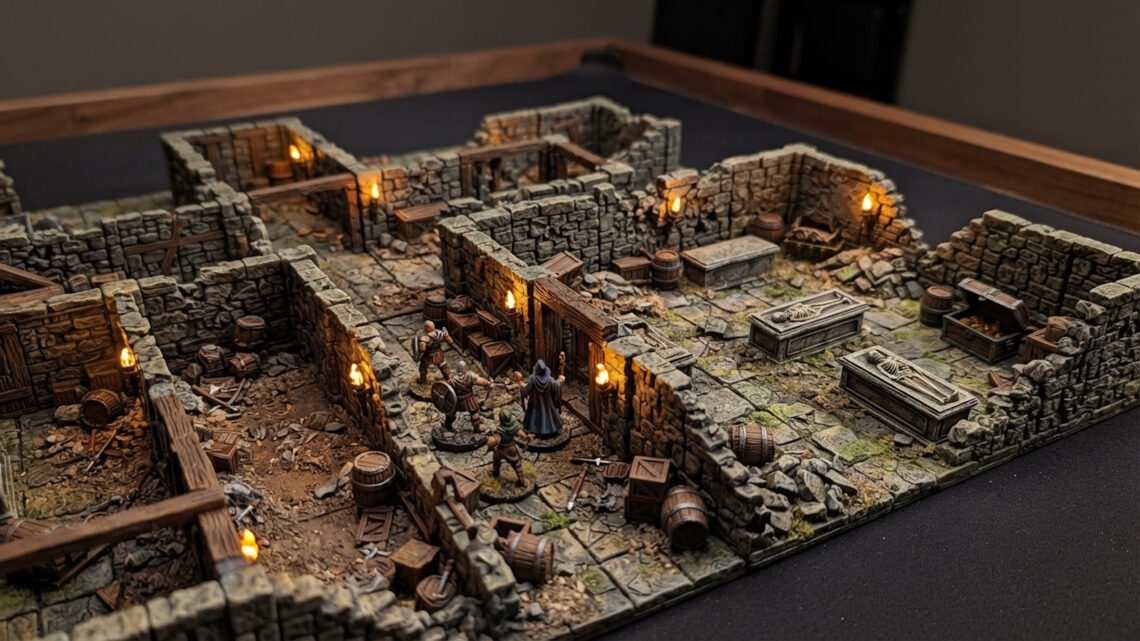
One of the defining features of a dungeon is the relationship between enclosed rooms and connecting passages.
Rooms provide space for encounters, objectives and exploration.
Corridors create movement and tension.
Try to avoid making every room exactly the same size. A mixture of small chambers and larger spaces gives the dungeon more variety.
A large chamber can act as a focal point, while smaller rooms can provide optional areas for exploration.
Use Walls to Define the Space
Walls are particularly useful because they immediately communicate the structure of the dungeon.
They can divide areas into rooms, create corridors and establish boundaries.
Broken sections can make the dungeon feel older and less uniform.
You can also use partial walls to create cover without completely preventing movement or visibility.
This is especially useful when you want terrain to influence gameplay without turning the table into a maze.
Leave Enough Room for Miniatures
Dungeon terrain can become crowded very quickly.
Remember that miniatures need space to move.
Before finalising the layout, imagine where models will actually stand. Check whether corridors are wide enough and whether players can reach important areas.
If a room looks impressive but leaves no space for miniatures, it may not be particularly useful during a game.
A little empty floor space is not wasted space.
It is part of the playable area.
Add Different Levels of Detail
Large walls and rooms create the structure, but smaller objects provide character.
Scatter terrain can make an otherwise empty dungeon chamber look much more convincing.
Depending on the setting, you could use:
- Chests
- Barrels
- Crates
- Sacks
- Broken stone
- Rubble
- Tombs
- Coffins
- Furniture
- Debris
The key is restraint.
A few carefully positioned objects can have more impact than filling every available space.
Create a Focal Chamber
Consider making one room more visually important than the others.
This could be the dungeon’s main chamber, throne room, crypt or treasure room.
Give it a distinctive feature.
Perhaps it contains a large stone structure, a group of tombs, a collection of ruined pillars or an important objective.
This creates a natural destination for the adventure.
It can also make the dungeon easier to remember because players associate different sections with different visual features.
Use Terrain to Tell a Story
Dungeon terrain can communicate history without requiring written explanations.
A damaged wall might suggest an old battle.
A group of coffins could indicate a crypt.
A broken chest might suggest that somebody has already searched the room.
Scattered crates could show that the area was once used for storage.
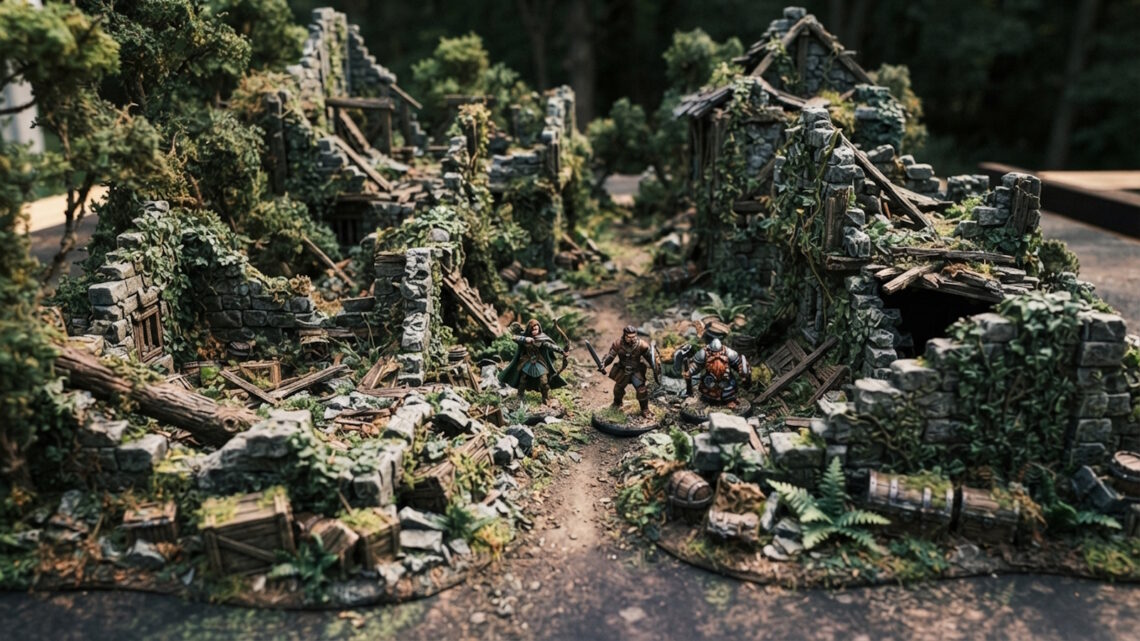
Rubble around a collapsed section can suggest that the dungeon has been abandoned for years.
These small visual clues help turn a collection of terrain into a setting.
Add Ruined Sections
Perfectly intact walls can make a dungeon feel newly constructed.
Ruined sections introduce variety.
A broken corner, collapsed wall or damaged doorway can suggest that the dungeon has been affected by time, combat or an earthquake.
Ruins are also useful for gameplay because broken walls can create partial cover and alternative routes.
You do not need to make every section damaged.
Mixing intact and ruined areas usually creates a more convincing result.
Use Scatter Terrain as Objectives
Small terrain pieces do not have to be purely decorative.
A chest can represent an objective.
A pile of crates could contain supplies.
A particular tomb could be the focus of a scenario.
A ruined section could mark the location of a hidden entrance.
This gives terrain a practical role in the game.
When designing a dungeon scenario, think about which pieces players might need to interact with rather than simply placing them for decoration.
Think About Line of Sight
Dungeon walls naturally create line-of-sight restrictions.
This can make combat more interesting because players cannot always see the entire battlefield.
However, avoid creating a layout where every movement choice is completely blocked.
Different heights, partial walls and open chambers can create a mixture of visible and hidden areas.
This gives players reasons to move rather than simply standing in one room.
Mix Large and Small Terrain
A dungeon becomes more visually interesting when terrain sizes vary.
Large walls establish the environment.
Medium-sized pieces create structure within rooms.
Small scatter terrain adds detail.
For example, a large stone chamber could contain several smaller crates, a chest and a few pieces of rubble.
This creates layers of visual detail without requiring every piece to be elaborate.
Use a Consistent Visual Style
You do not necessarily need every piece to come from the same terrain set.
Different designs can work together if they share a broadly consistent appearance.
Stone walls, ruins, rubble and tombs can usually be combined successfully because they belong to the same visual environment.
Painting can also bring different pieces together.
Using similar stone colours, washes and highlighting techniques can make separately acquired terrain look like part of the same dungeon.
Don’t Forget the Entrance
The dungeon entrance is often overlooked.
It can provide a transition between the outside world and the underground environment.
A ruined doorway, stone passage, staircase or broken wall can establish the setting before the players even enter.
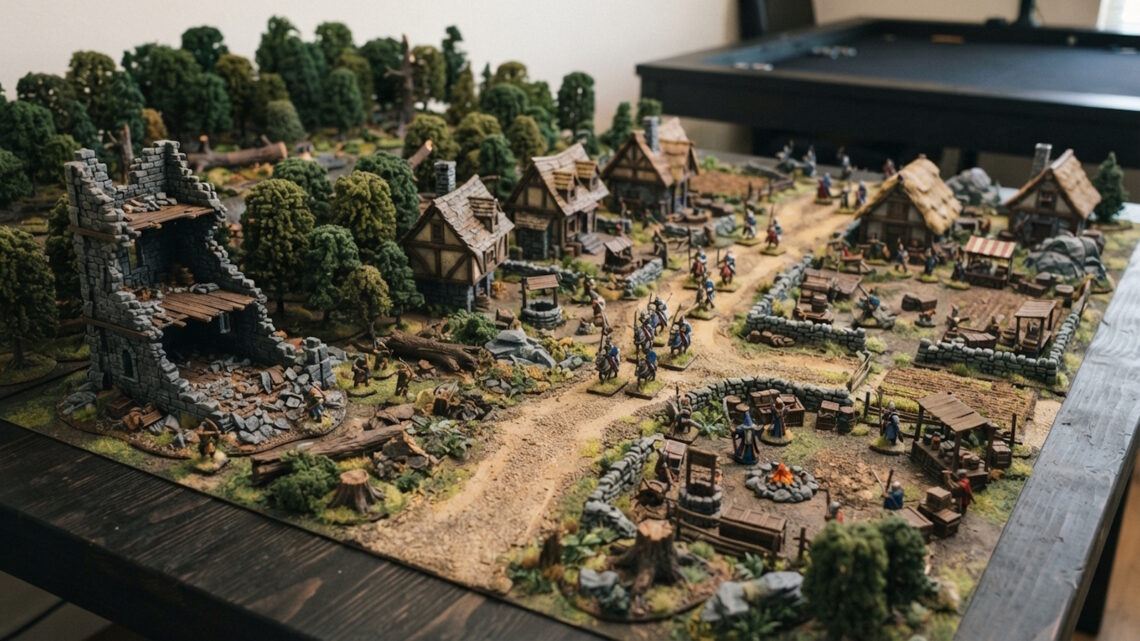
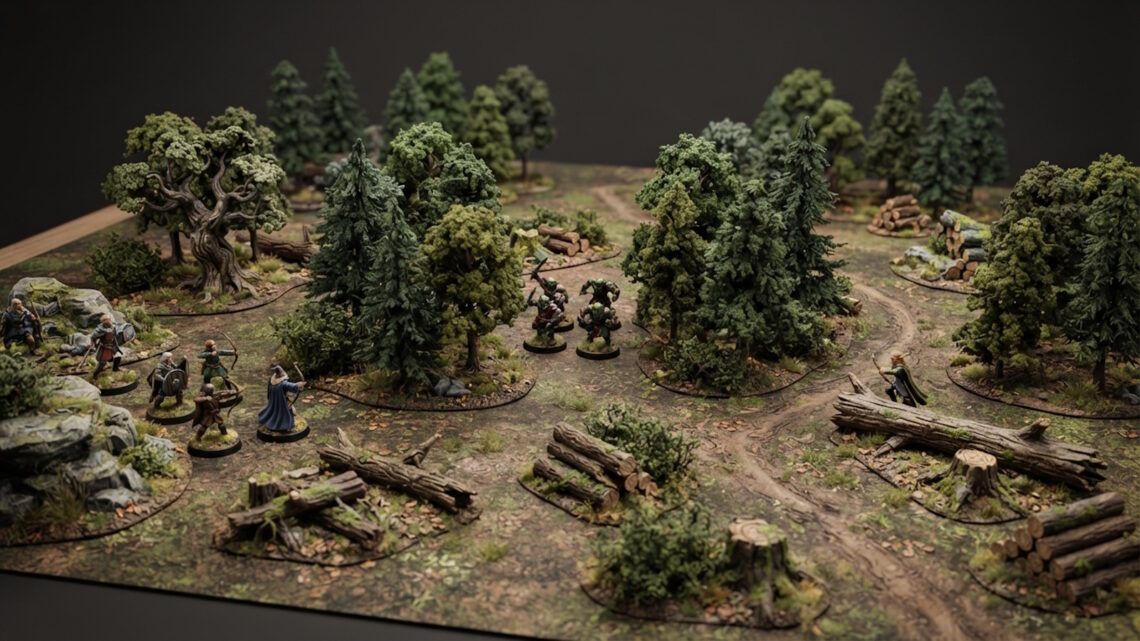
If your gaming table includes outdoor terrain, you can also combine woodland or ruined scenery around the entrance.
This creates a natural connection between different types of terrain.
Build a Modular Dungeon
A modular approach gives you much more flexibility.
Instead of building one permanent dungeon layout, collect terrain that can be rearranged into different rooms and corridors.
A wall used on one gaming night could form part of a different room the next time.
Likewise, a chest, tomb or pile of rubble can move between layouts.
This makes a relatively small collection much more useful.
Expand Gradually
You do not need to create the entire dungeon in one go.
Start with enough terrain for a few rooms.
Play a game.
Then decide what you actually need.
You may discover that you need more walls, more scatter terrain or more open floor space.
Building gradually also allows you to develop the setting naturally.
Final Thoughts
A good dungeon gaming table balances atmosphere with practicality.
Start with rooms, corridors and walls, then introduce ruined sections and smaller scatter terrain. Use chests, barrels, crates, tombs and rubble to make individual areas feel different without overcrowding the table.
Most importantly, remember that dungeon terrain is there to support the game.
Leave enough room for miniatures, create interesting routes and use terrain to provide objectives, cover and visual storytelling.
A relatively small collection of well-chosen pieces can create dozens of different dungeon layouts.