Building a fantasy battlefield from scratch can seem like a huge project.
There are buildings to consider, roads, ruins, trees, walls, scatter terrain and objectives. It is easy to think you need a massive collection before you can create a convincing gaming table.
You don’t.
A good fantasy battlefield can be built gradually, using a relatively small collection of versatile terrain.
The key is to start with the overall battlefield rather than individual pieces.
Decide What Kind of Battlefield You Want
Start by imagining the setting.
It could be:
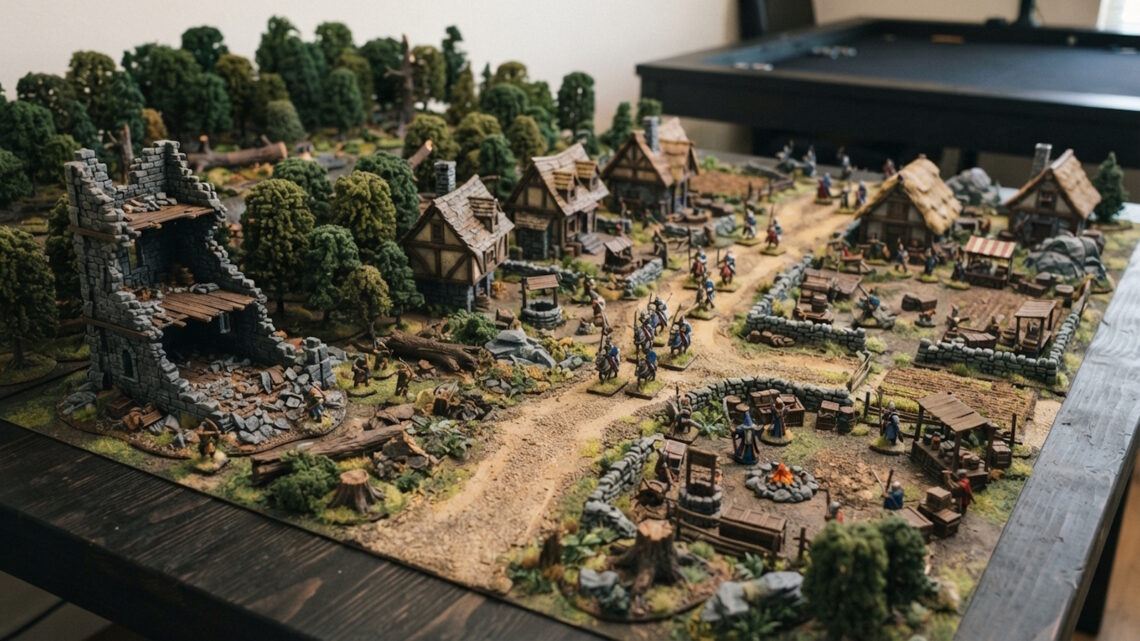
- A fantasy village
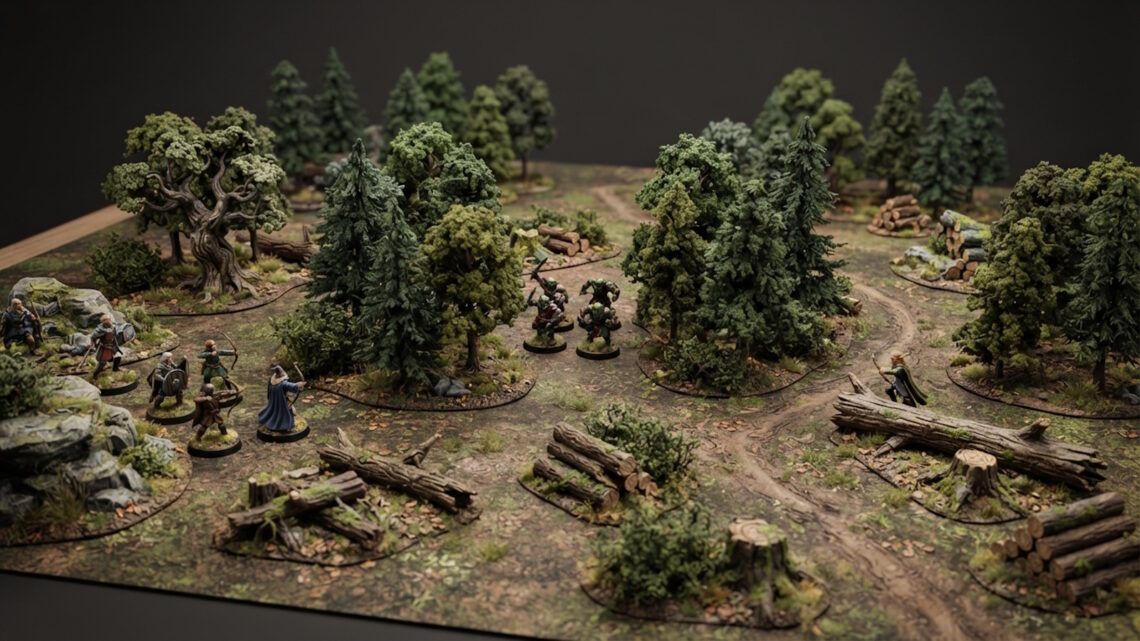
- A woodland
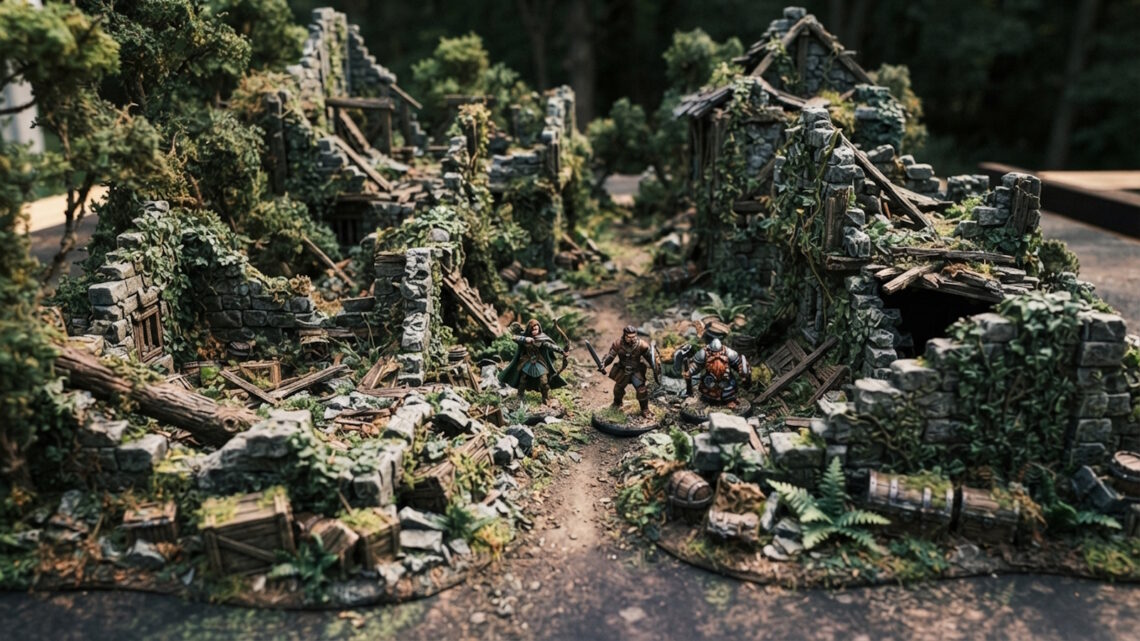
- A ruined settlement
- A battlefield beside a castle
- A roadside encounter
- An abandoned town
- A fortified outpost
The setting will determine which types of terrain are most useful.
You do not need to choose one permanent theme, either.
Versatile terrain can be reused in several settings.
Start With the Table
Think about the size and shape of your gaming surface.
Then decide where the major terrain areas will be.
You might have a large building on one side, woodland on another and a more open central area.
Do not immediately start filling every gap.
First establish the major structure of the battlefield.
Place the Largest Terrain First
Large terrain pieces provide the foundation.
These might include:
- Buildings
- Ruins
- Towers
- Large walls
- Groups of trees
Place these first.
Then look at the remaining open areas.
This makes it easier to see where smaller pieces are actually needed.
Create a Main Route
Most fantasy battlefields benefit from some kind of route.
It could be a road through a village, a forest path or a track leading towards a ruined settlement.
The route does not have to run directly from one edge of the table to the other.
A winding route can create a more natural appearance.
It can also give players an obvious visual path through the battlefield.
Add Secondary Routes
Once the main route exists, consider alternatives.
A secondary path might pass through woodland.
Another might go around a ruined building.
An open area could provide a shorter but more exposed route.
This creates choices.
Players can decide whether to take the direct path or use terrain for protection.
Create Open Areas
Open ground is important.
It gives miniatures room to move and creates contrast with dense terrain.
A large clearing can become the centre of a battle.
An open village square can become an objective area.
A field between two wooded areas can create a dangerous crossing.
Do not think of open ground as unfinished terrain.
It is part of the battlefield design.
Add Natural Terrain
Trees are some of the most versatile pieces in a fantasy terrain collection.
They can create:
- Forests
- Woodland edges
- Village surroundings
- Roadside scenery
- Overgrown ruins
- Wilderness areas
Add tree stumps, fallen logs and log piles to give wooded sections more variation.
You do not need to turn every tree into a dense forest.
Several small groups can create a more flexible battlefield.
Add Buildings and Ruins
Buildings provide shelter, visual landmarks and areas for objectives.
Ruins can provide cover while allowing more open movement through broken structures.
Try to vary their condition.
One building might be relatively intact.
Another could be partially ruined.
A third could be little more than a wall and rubble.
This makes the battlefield feel less artificial.
Add Scatter Terrain
This is where smaller pieces bring everything together.
Use scatter terrain to fill specific areas rather than randomly covering the table.
For example:
- Barrels near buildings
- Crates beside roads
- Sacks near storage areas
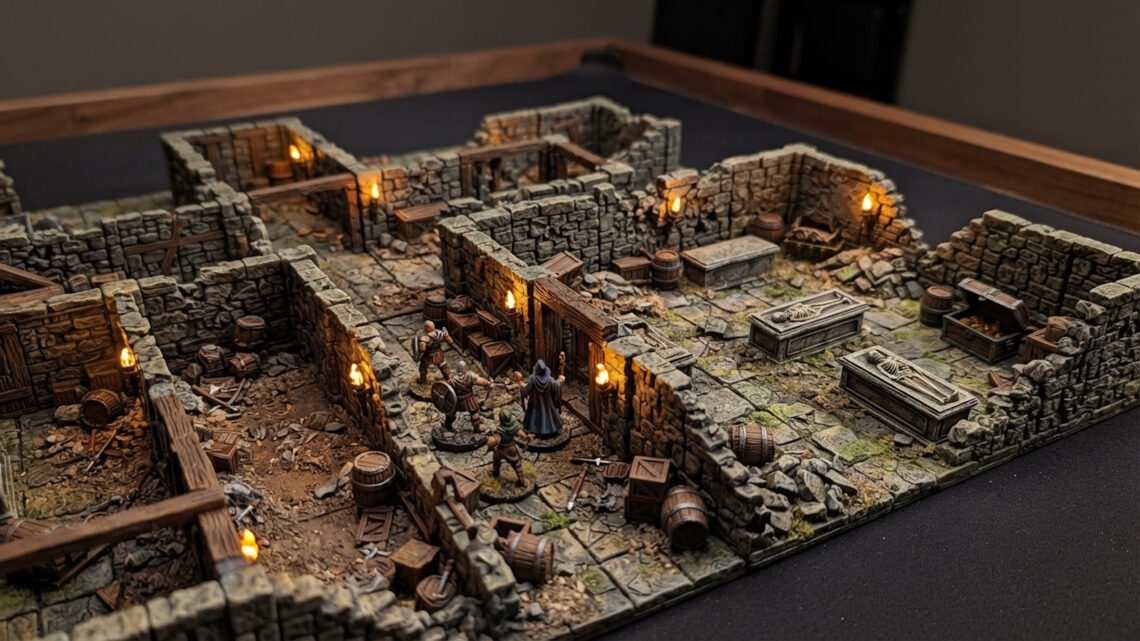
- Chests inside ruins
- Logs beside woodland
- Stumps around forest edges
- Rubble near damaged structures
These small details can make the battlefield feel lived in.
Create Terrain Groups
Think in groups rather than individual objects.
A group of barrels and crates can suggest a storage area.
Several fallen logs can create a woodland obstacle.
A few pieces of rubble around a broken wall make the ruin feel connected to the ground.
Groups are more visually convincing and easier to move during a game.
Create a Focal Point
A fantasy battlefield benefits from having at least one location that immediately attracts attention.
This could be:
- A ruined tower
- A large building
- An ancient tree
- A temple
- A central ruin
- A fortified structure
The focal point does not necessarily have to be in the centre.
It simply gives the battlefield an identity.
Add Objectives
Now decide where the important locations are.
You could use a chest, ruined building, monument, group of supplies or natural feature.
Spread objectives around the table so that different terrain areas matter.
This encourages players to explore more of the battlefield.
Consider Line of Sight
Look across the battlefield.
Are there extremely long sight lines?
Can one side see almost everything?
If so, move some buildings, trees or walls to break up the views.
The aim is not to hide the entire battlefield.
Instead, create a mixture of visible and protected areas.
Consider Movement
Place a few representative miniatures on the table.
Try moving them from one side to the other.
Do the routes make sense?
Are there areas that are impossible to reach?
Are some sections so crowded that terrain constantly has to be moved?
Make adjustments before the game starts.
Think About Balance
Your battlefield does not need to be perfectly symmetrical.
However, both players should have useful opportunities.
One player should not have all the cover while the other starts in completely open ground.
Look at the table from both deployment zones.
Consider the routes, terrain density and important objectives available to each side.
Add Different Heights
Height gives a fantasy battlefield more visual depth.
Trees can rise above low scatter terrain.
Buildings can dominate smaller structures.
Ruined walls can sit between the two.
You do not need enormous towers everywhere.
Even modest height differences can make a table feel much more three-dimensional.
Don’t Try to Finish Everything at Once
Building a complete battlefield can be expensive and time-consuming if you try to do everything immediately.
Instead, build it in stages.
Start with:
- A few major structures
- Several trees
- Some scatter terrain
- A main route
- One or two objectives
Play a game.
Then identify what the battlefield is missing.
Perhaps you need more trees.
Perhaps the centre is too open.
Perhaps you need more low cover.
Add terrain based on what you actually discover during games.
Build a Flexible Collection
Choose terrain that can work in more than one setting.
A tree can be used in a forest, village or ruined settlement.
A barrel can belong beside a tavern, warehouse, road or campsite.
A crate can become storage, supplies or an objective.
A ruined wall can be part of a village, castle, temple or battlefield.
This flexibility means a relatively small collection can create many different layouts.
Keep the Battlefield Playable
The most important rule is simple:
The table needs to be fun to play on.
A spectacular battlefield that makes movement impossible is not necessarily a successful gaming table.
Leave room for models.
Keep important routes accessible.
Create cover without blocking every path.
Make objectives reachable.
The terrain should encourage decisions rather than simply preventing movement.
Photograph Your Finished Layout
Once you have created a battlefield you particularly like, take some photographs.
You can use them as references for future games.
You might also discover new combinations when looking at the photograph afterwards.
Over time, you can build a collection of layouts that are ready to recreate.
Expand the Battlefield Over Time
There is no need for your battlefield to remain the same.
Add new terrain when you find something useful.
A new group of trees can create another woodland section.
A few ruins can transform an open area.
Additional scatter terrain can make existing buildings feel more detailed.
This gradual approach also means your terrain collection grows around your actual gaming needs.
Final Thoughts
Building a fantasy battlefield from scratch does not require hundreds of terrain pieces.
Start with the table, establish the largest terrain features and create sensible routes. Add open ground, woodland, buildings and ruins, then use smaller scatter terrain to connect everything visually.
Think about objectives, cover, line of sight and movement as you arrange the battlefield.
Most importantly, build gradually.
A flexible collection of trees, ruins, buildings and scatter terrain can be rearranged into countless different fantasy battlefields.
The goal is not to create the most crowded table possible.
It is to create a battlefield that looks convincing, tells a story and gives players interesting choices throughout the game.