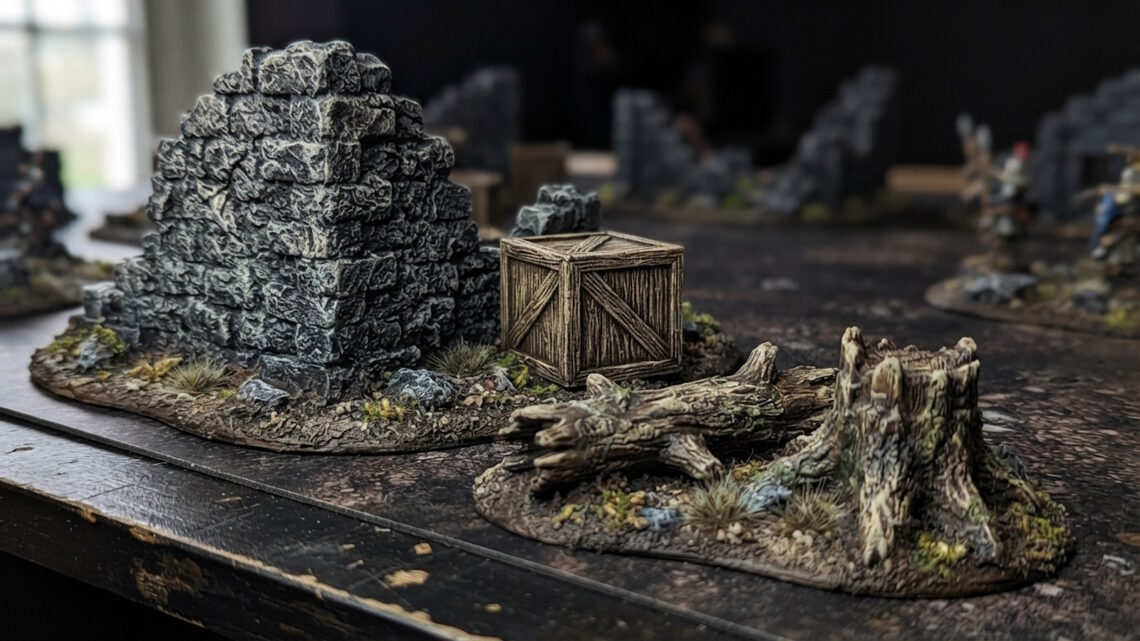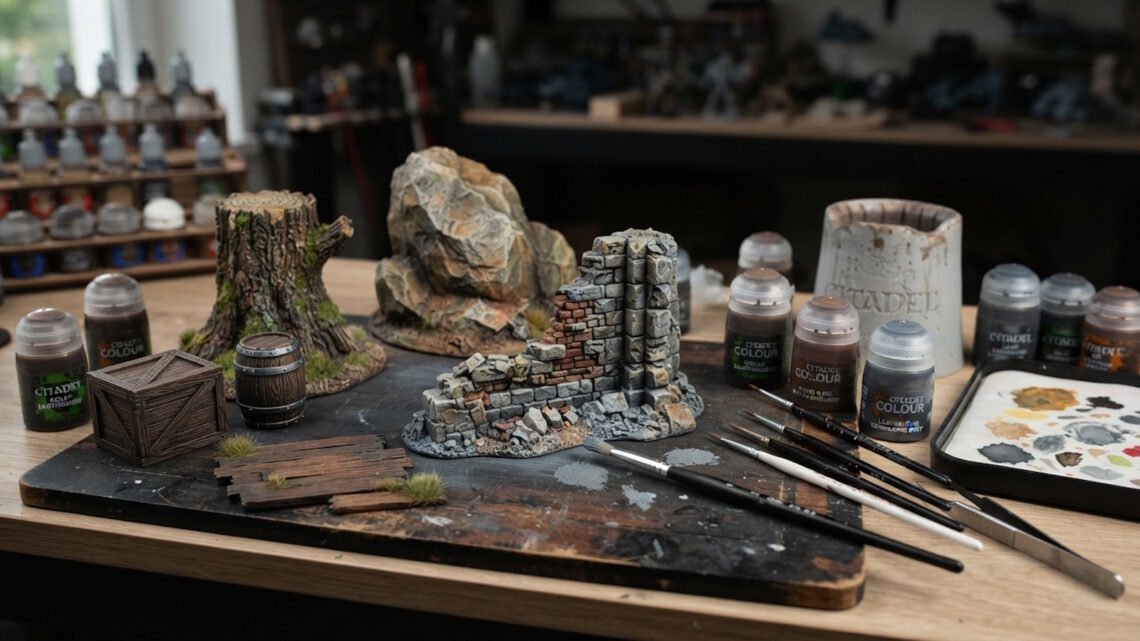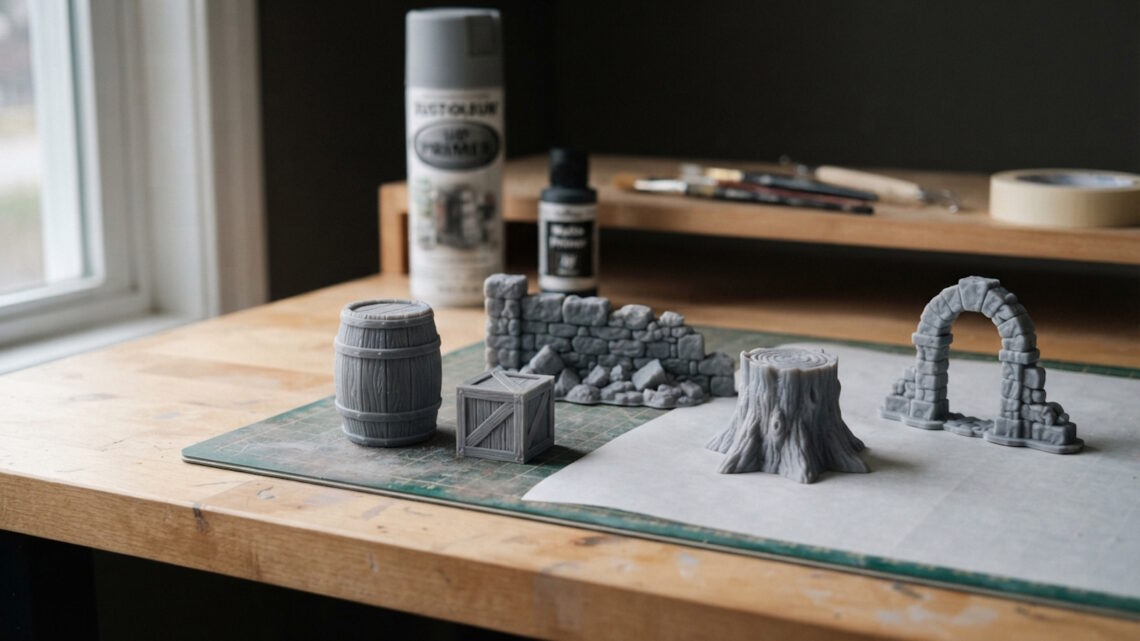
Weathering is the process of making miniature scenery appear older, used or exposed to the environment.
It can transform a clean-looking terrain piece into something that feels as though it has been sitting in a real location for years.
The key is subtle variation.
You don’t need to cover every surface with dirt and damage.
Start With a Painted Base
Weathering is usually easier after the terrain has been painted.
Start with your base colours and establish the main appearance of the object.
Then add the signs of age.
This gives you more control over the final result.
Darken Recesses
Dirt and grime often accumulate in recessed areas.
A darker wash can emphasise these sections.
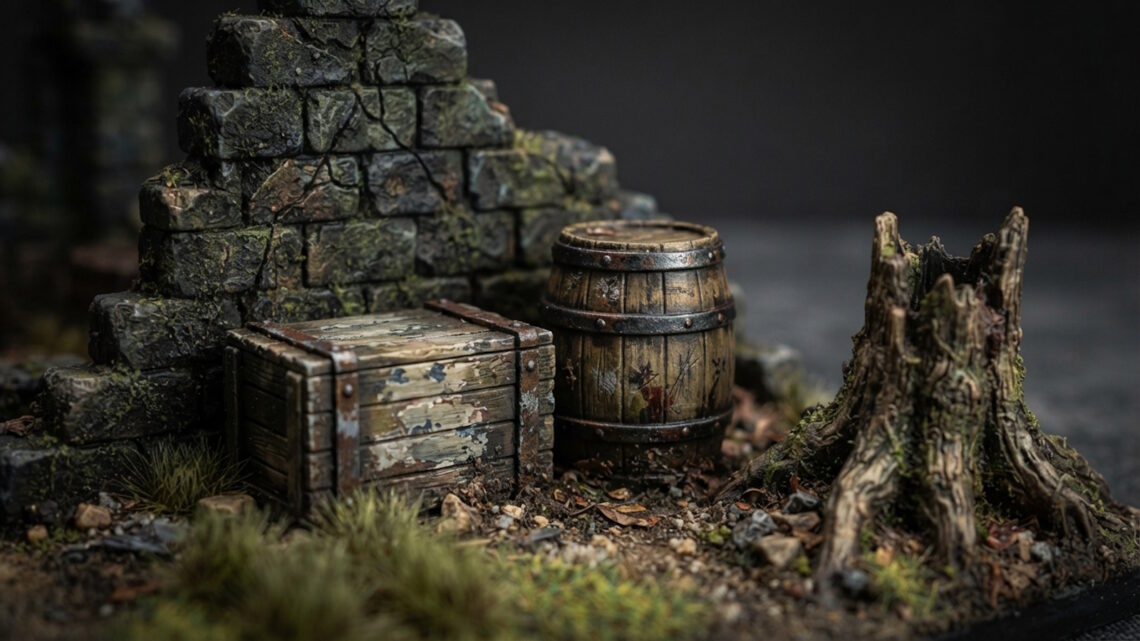
This works particularly well on stone walls, wooden structures and heavily textured scenery.
Don’t make every recess equally dark.
Natural variation is more convincing.
Add Worn Edges
Edges can become lighter or damaged through repeated use.
Dry brushing a lighter colour across raised edges can create the impression of wear.
This is particularly effective on wooden crates, barrels and stone terrain.
Vary the Colour
Old materials rarely remain completely uniform.
Wood can fade.
Stone can contain different shades.
Paint can become patchy.
Use several related colours to break up large areas.
Add Dirt Near the Ground
The lower parts of scenery are often darker or dirtier than higher surfaces.
Add subtle darker tones around the bottom of buildings, walls and props.
This helps the terrain appear connected to the ground.
Weather Wood
Wood can be weathered in several ways.
Dark recesses can emphasise the grain.
Lighter dry brushing can highlight raised sections.
Muted grey or brown tones can suggest old, exposed wood.
Avoid making every piece look equally old.
Weather Stone
Stone can benefit from colour variation.
Use several related greys, browns or muted tones.
Darker areas can suggest accumulated dirt.
Subtle greenish tones can suggest moss or organic growth where appropriate.
Add Environmental Effects
Different environments cause different types of weathering.
A woodland scene might contain more vegetation and organic staining.
A dry environment might show dust and faded surfaces.
An abandoned settlement could contain heavier dirt and overgrowth.
Think about where the terrain supposedly exists.
Don’t Overdo It
Heavy weathering can sometimes make terrain look less realistic.
A few controlled areas are often enough.
If every surface is covered with extreme effects, there is nowhere for the viewer’s eye to rest.
Use Weathering to Tell a Story
Weathering can indicate what happened to an object.
A clean barrel might belong to a working tavern.
A faded barrel covered in dirt could belong to an abandoned building.
A heavily weathered wall suggests a much older structure.
The effect should therefore support the story of the scene.
Check the Terrain at Normal Viewing Distance
Small weathering effects can disappear when the terrain is viewed from further away.
Step back occasionally.
If the effect is barely visible, you may need slightly stronger contrast.
If it dominates the terrain, reduce it.
Weathering works best when it adds history without becoming the main feature.
Use darker recesses, worn edges, colour variation, ground-level dirt and environmental effects to create a sense of age.
The goal isn’t to make terrain look damaged for the sake of it.
The goal is to make it look as though it belongs in the world you’ve created.