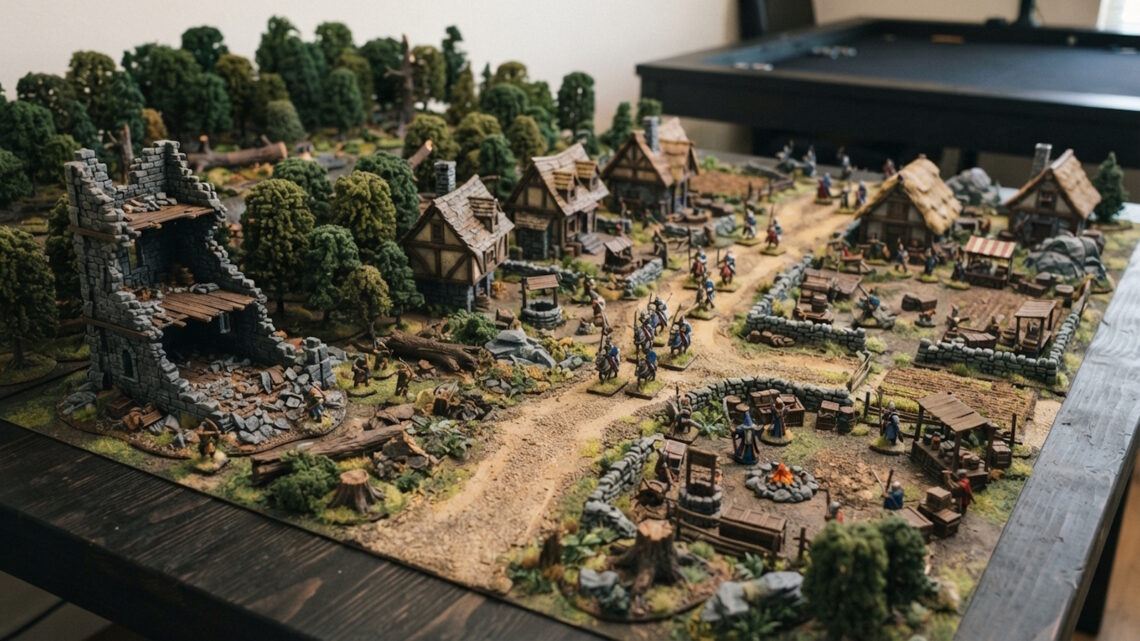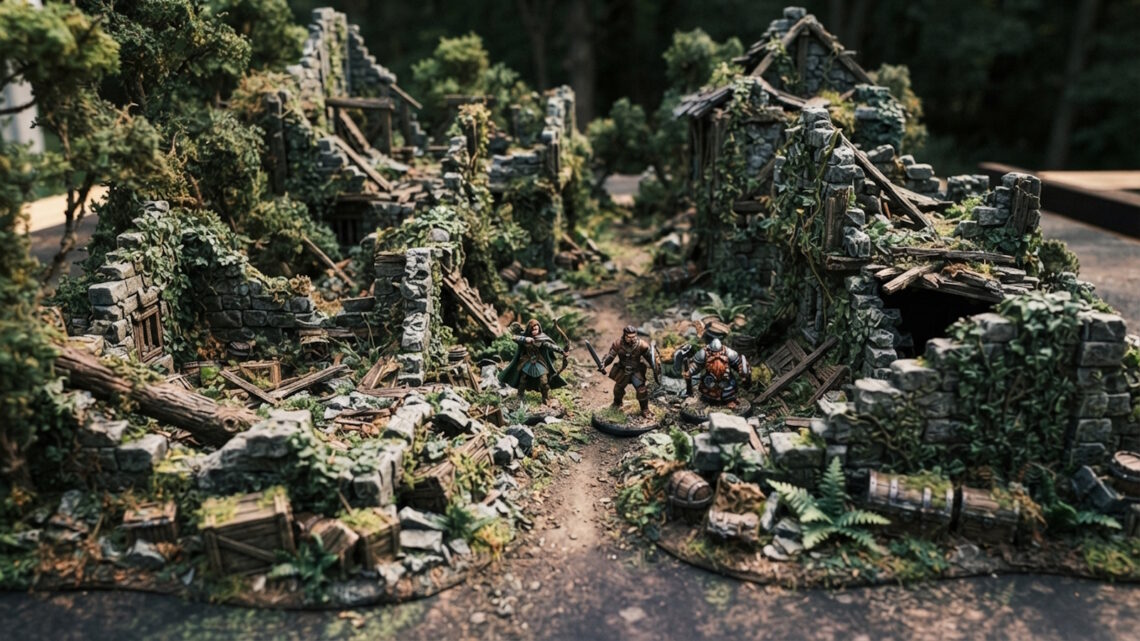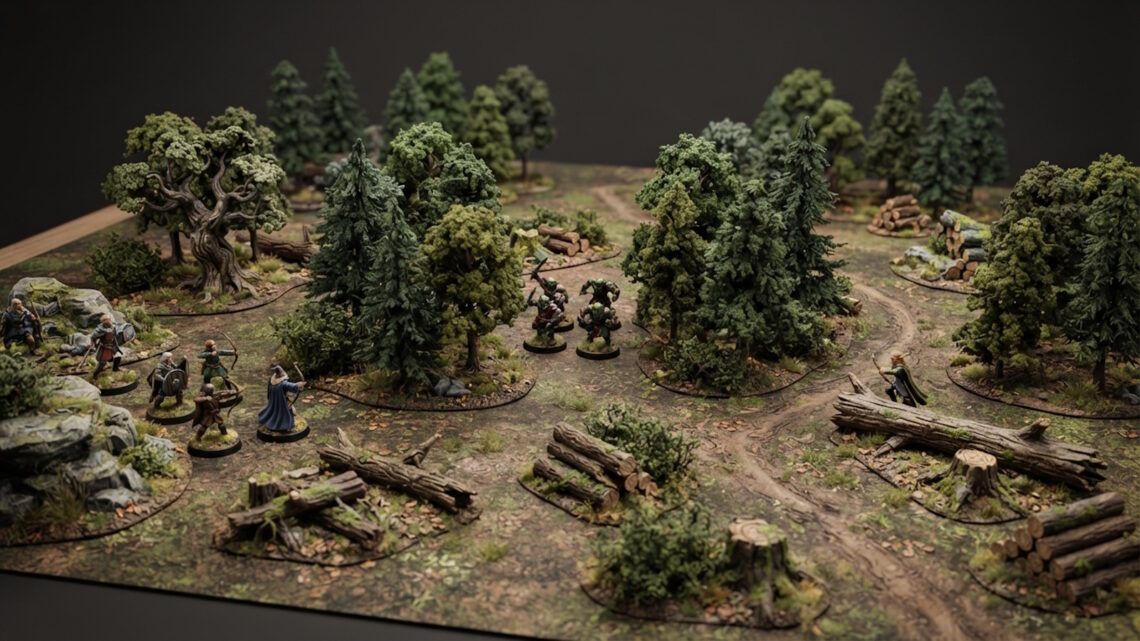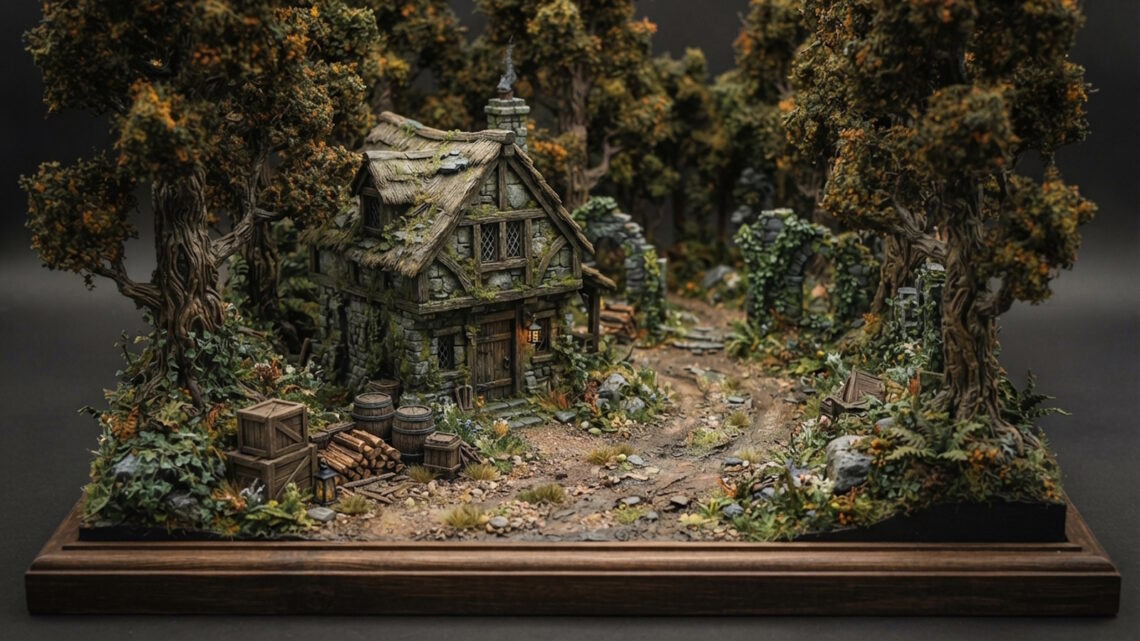
A fantasy diorama is a small-scale scene designed to show a particular place, moment or environment. Unlike a collection of individual models, a diorama connects its elements into one cohesive setting.
A fantasy diorama could show a woodland path, a ruined village, an isolated cottage or an ancient settlement hidden among trees.
You don’t need an enormous display area to get started. A relatively small base can be enough to create a convincing scene.
Choose Your Scene
Start by deciding what you want the finished diorama to represent.
A forest clearing is relatively simple because trees and natural terrain can provide much of the structure. A village scene may require buildings, paths and more architectural detail.
Think about the viewer’s perspective too.
Will the diorama mainly be viewed from the front? From above? From several sides?
This affects where you place taller scenery.
Select a Suitable Base
The base gives your diorama its physical boundaries.
A wooden board, MDF panel or other rigid surface can provide a useful foundation. The exact material matters less than making sure the base is stable.
Keep the size manageable, especially for a first project.
A smaller scene allows you to concentrate on composition and detail without having to produce enormous amounts of scenery.
Establish the Ground
Once the base is ready, create the general shape of the ground.
You can keep it flat or introduce gentle changes in elevation. Small rises, dips and slopes can make a scene considerably more interesting.
Paths are particularly effective because they provide a visual route through the scene.
Don’t worry about adding every texture at this stage. Establish the main shapes first.
Position the Major Terrain
Place the largest pieces before permanently attaching anything.
Buildings, large trees, ruins and major rock formations should establish the composition.
Try several arrangements.
A building placed directly in the centre can sometimes create a static image. Moving it slightly off-centre can create more visual interest.
Similarly, trees can frame a scene without completely hiding the important features.
Add a Sense of Story
Fantasy dioramas work particularly well when the scenery suggests something about the world.
A neglected building might have broken walls, scattered crates and vegetation growing around it.
A working settlement might have barrels, sacks, carts and other signs of activity.
Even a few small props can imply a much larger story.
Create Layers of Detail
Work from large to small.
After the major structures are positioned, add medium-sized terrain such as logs, rocks, walls and tree stumps.
Then add smaller scenery and surface details.
This creates visual layers and prevents the entire diorama from feeling equally busy.
Think About Colour
Colour can help separate different areas of the scene.
Earthy browns and greens work naturally for woodland environments. Stone structures can use several related grey or brown tones rather than one completely uniform colour.
You can also use small areas of stronger colour to draw attention to particular objects.
The aim is not to make everything colourful. It is to create enough variation that different surfaces can be identified.
Add Vegetation
Vegetation is one of the easiest ways to connect separate terrain pieces.
Grass, moss, bushes, roots and fallen leaves can soften the transition between buildings and the ground.
Even a few areas of vegetation can make an artificial-looking surface appear much more natural.
Don’t distribute vegetation evenly. Real environments tend to have clusters and gaps.
Add Small Props
Once the main scene is established, add smaller objects.
Barrels, crates, sacks, chests, baskets and other scenery can help communicate what the location is used for.
For a ruined setting, broken objects and scattered debris may be more appropriate.
These details don’t need to dominate the scene. Their role is to make the environment feel occupied and believable.
Leave Some Open Space
A common mistake is adding too much detail.
Open ground provides contrast and makes the detailed areas more noticeable.
It also gives the viewer somewhere to look between the major focal points.
If everything is equally busy, individual pieces lose their impact.
Finishing the Diorama
Once everything is positioned, step back and look at the entire scene.
Check whether your eye naturally moves through the composition.
Look for areas that feel too empty and areas that feel overcrowded.
You can then make final adjustments before permanently fixing the terrain in place.
A successful fantasy diorama doesn’t require hundreds of pieces. It needs a clear setting, convincing scale and enough detail to make the viewer imagine what the world might be like beyond the edges of the display.
Start with a small scene, build it in layers and let the terrain tell the story.