Buildings provide some of the strongest visual features in a miniature environment.
However, buildings placed on an otherwise empty base can sometimes look disconnected.
Scatter terrain helps solve this by connecting architecture to the surrounding environment.
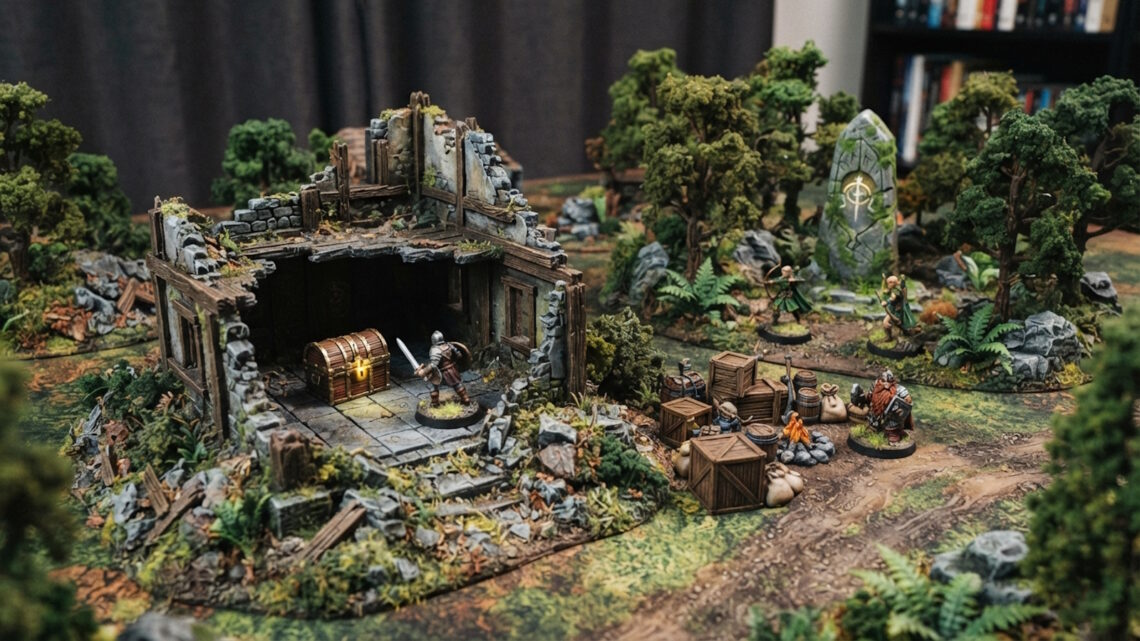
Barrels, crates, rocks, trees, logs, sacks and other small scenery can make buildings feel as though they belong in a real location.
Start With the Buildings
Place the major structures first.
Think about entrances, windows, roads and surrounding space.
Don’t immediately fill the gaps with small props.
You need to understand the overall composition first.
Identify Functional Areas
Look at each building and consider how it might be used.
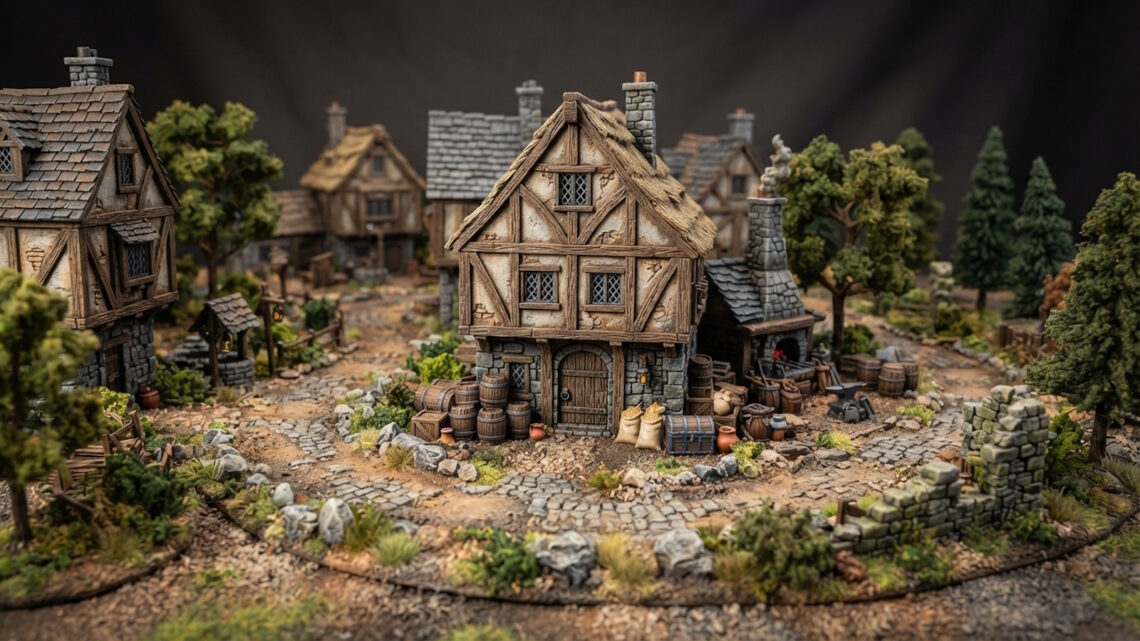
A tavern could have barrels near its entrance.
A warehouse might have crates.
A workshop could have storage or materials nearby.
A cottage might have a woodpile or small garden.
This gives you a logical starting point for scatter terrain.
Create a Transition Around Buildings
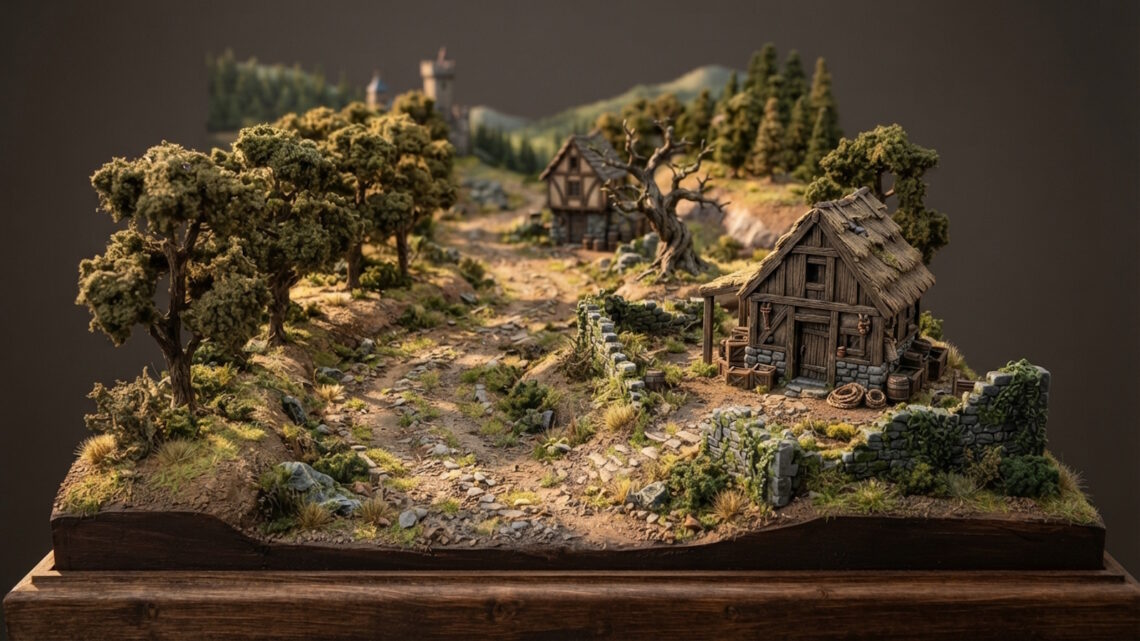
The ground immediately around a building should connect naturally to the wider environment.
A dirt path can lead from the door.
Rocks or vegetation can appear further away.
Small props can sit near the entrance.
This creates a gradual transition instead of an abrupt boundary.
Avoid Placing Props Against Every Wall
A common mistake is surrounding buildings with an even line of scenery.
Real environments don’t usually work like that.
Leave some walls completely clear.
Concentrate props in areas where they make sense.
This creates variation.
Use Height
Scatter terrain can also add height around buildings.
Trees and larger rocks can create vertical contrast.
Smaller crates and barrels occupy the lower levels.
This layered approach creates more visual depth.
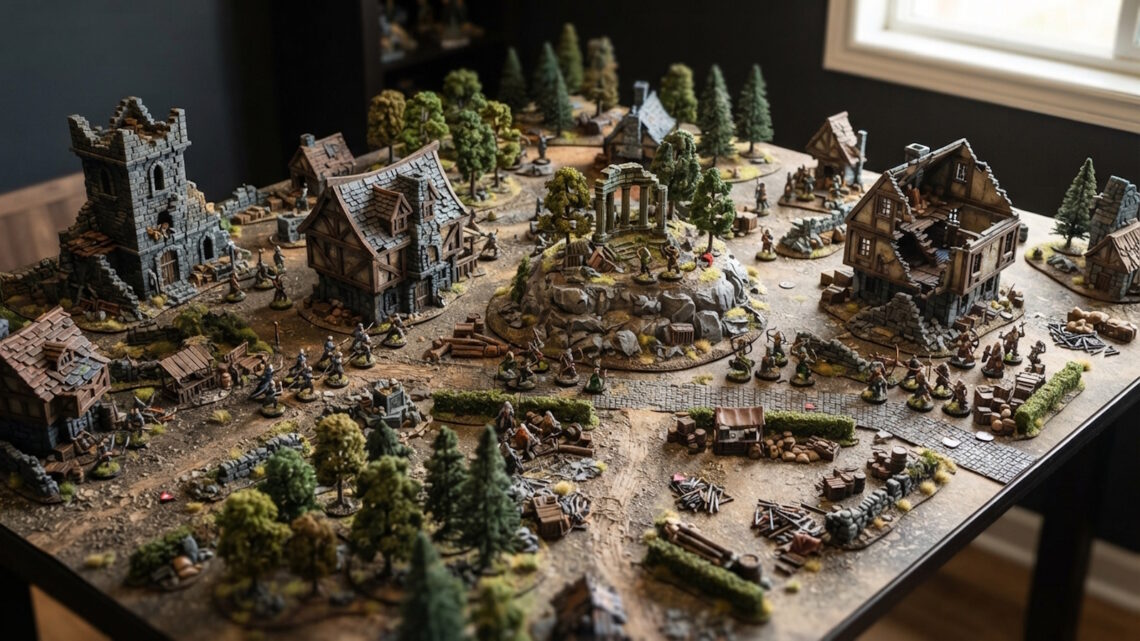
Connect Buildings With Roads
Roads and paths provide another connection.
A path can lead from one building to another.
Scatter terrain can sit alongside it.
Trees or walls can frame sections of the route.
This creates a coherent environment rather than separate buildings placed independently.
Use Natural Scenery
Natural elements can soften architecture.
Trees, rocks and vegetation can be placed around the edges of settlements.
They can also appear between buildings.
This helps connect the village to the wider landscape.
Match the Props to the Setting
Scatter terrain should reflect the location.
A village might use crates, barrels and sacks.
A forest might use logs, stumps and rocks.
A ruined settlement might contain rubble and abandoned objects.
Using appropriate scenery reinforces the setting.
Create a Visual Hierarchy
The building should usually remain one of the main focal points.
Don’t surround it with so many props that its shape becomes difficult to see.
Use smaller scenery to direct attention rather than compete with the architecture.
Leave Open Ground
Open ground gives the scene breathing room.
It also creates contrast.
A detailed area beside an empty patch can make both seem more intentional.
Don’t feel obligated to fill every space.
Buildings and scatter terrain work best together when there is a clear relationship between them.
Place the architecture first, consider what happens around each building, then use smaller scenery to connect those areas to roads, vegetation and the surrounding landscape.
The result is a miniature scene that feels integrated rather than assembled piece by piece.