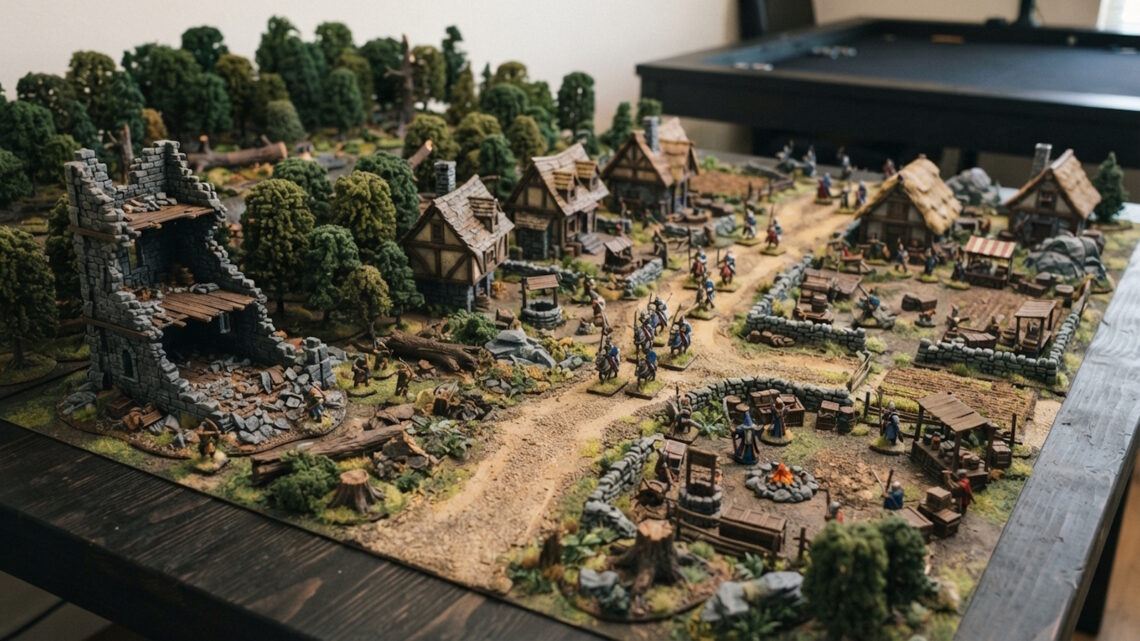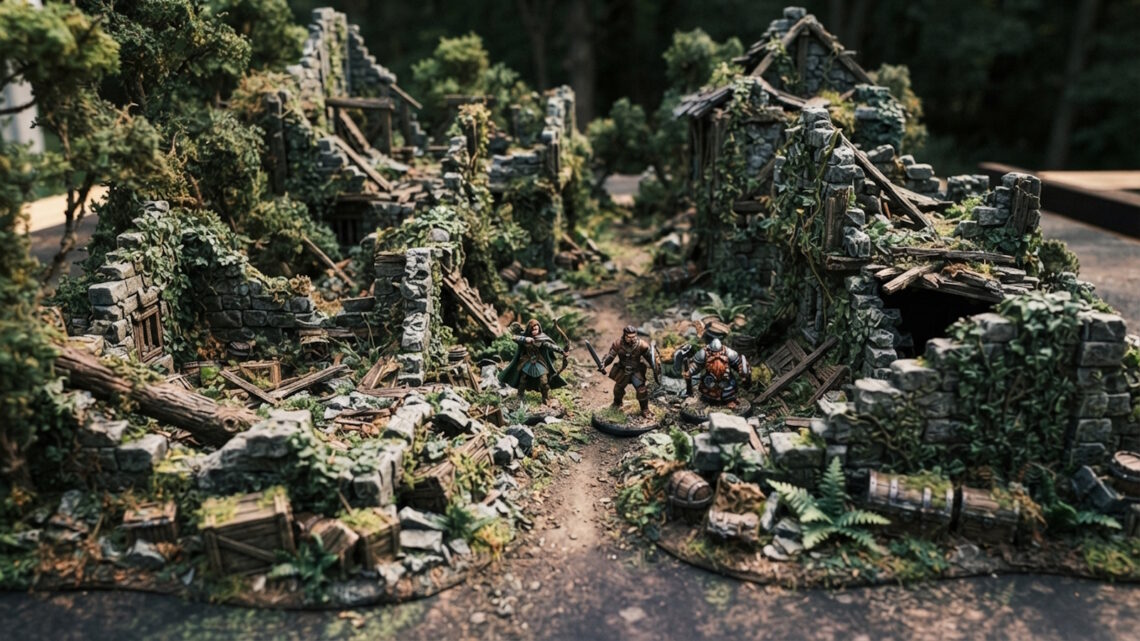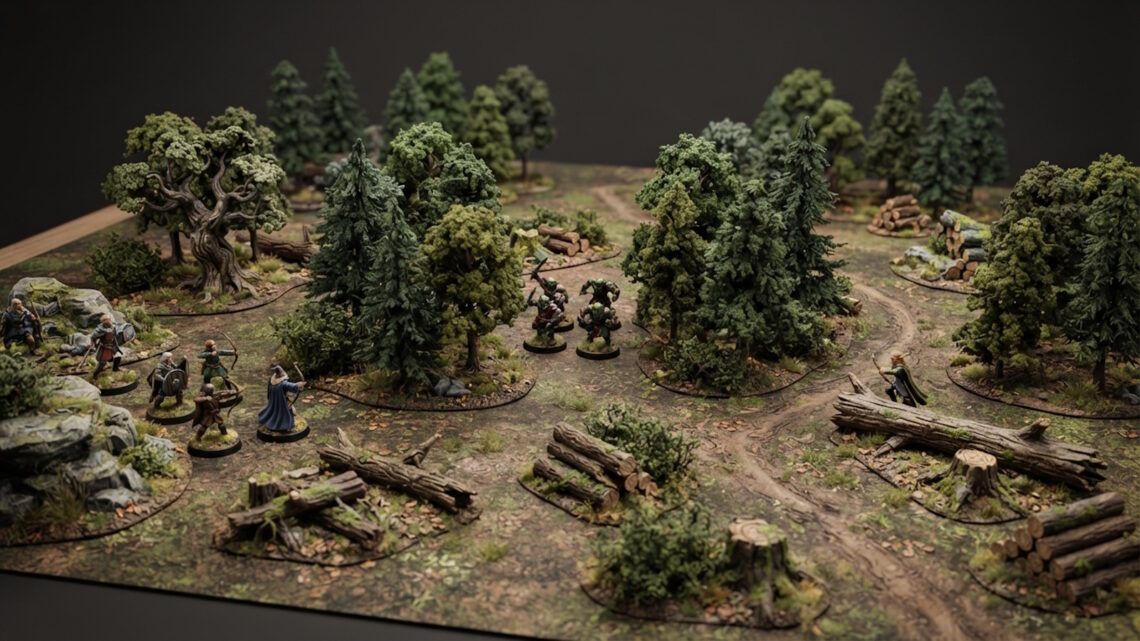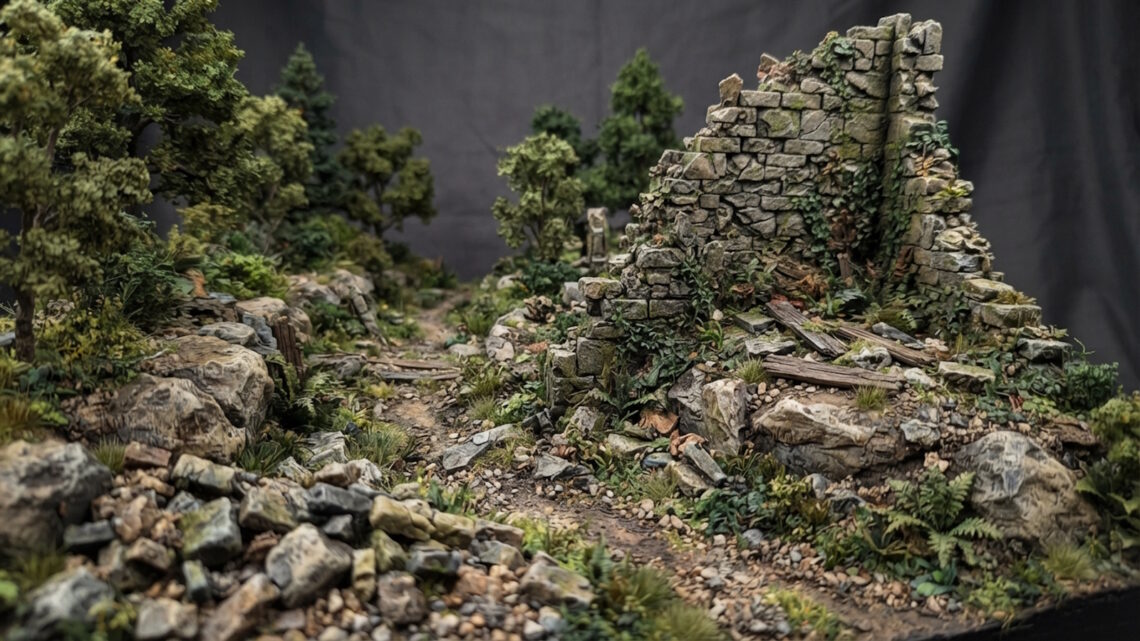
Rocks and stone are some of the most useful pieces of scenery for miniature landscapes.
They can create height, define boundaries, add texture and make otherwise flat areas more interesting.
Stone can also connect natural landscapes with architectural terrain. The same scene might contain natural rock formations alongside walls, ruins or paths.
Start With Large Rock Features
Large rocks can establish the structure of a landscape.
Place them before adding smaller pieces.
They can frame a path, mark the edge of a clearing or create a focal point.
Avoid positioning large rocks at perfectly regular intervals.
Create Groups
Individual rocks can look disconnected.
Small groups usually appear more natural.
Combine different sizes rather than creating clusters of identical pieces.
A larger rock surrounded by several smaller stones can create a convincing formation.
Use Rocks to Break Up Flat Ground
Flat ground can make a miniature landscape look unfinished.
A few rocks can introduce height and variation without requiring a complicated base.
Place them where they make environmental sense.
Rocky areas might appear beside paths, at the edges of woodland or around exposed ground.
Add Rubble to Ruins
Stone rubble is particularly useful around damaged buildings.
Larger broken stones can sit near the base of a collapsed wall.
Smaller pieces can spread out from the main damage.
This creates a natural transition between the structure and the ground.
Create Stone Boundaries
Stone can also define areas.
Low walls, rock lines and scattered stones can separate paths, fields, woodland and buildings.
They don’t need to form perfect barriers.
Irregular boundaries often look more natural.
Combine Stone With Vegetation
Rocks become more convincing when vegetation interacts with them.
Grass can grow around their edges.
Moss can cover sections.
Small plants can emerge from gaps.
This helps connect the stone to the wider landscape.
Vary the Colours
Stone isn’t necessarily one uniform grey.
Natural rock can contain warmer or cooler tones depending on its type and environment.
Fantasy scenery gives you even more freedom.
Use a consistent overall palette while allowing individual stones to vary slightly.
Think About Scale
Large rocks can change how a scene feels.
A large boulder beside a miniature figure can make the landscape seem imposing.
Smaller stones provide surface detail.
Using several scales of stone together creates a more convincing environment.
Use Stone as a Focal Point
A particularly distinctive rock formation can become a visual landmark.
A path might curve around it.
Trees can frame it.
A building could sit nearby.
This gives the scene a reason for its layout.
Avoid Even Distribution
Scattering identical stones evenly across the base can make the scene look artificial.
Instead, use clusters and leave areas with little or no stone.
This creates contrast.
It also makes the rocky sections appear more deliberate.
Rocks and stone are useful because they work in almost any miniature environment.
They can represent natural geology, damaged architecture, roads, walls, rubble or simple ground detail.
Use a mixture of sizes, combine stone with vegetation and place it in clusters rather than patterns.
Even a relatively small amount of well-positioned stone can make a miniature landscape feel more substantial and believable.